
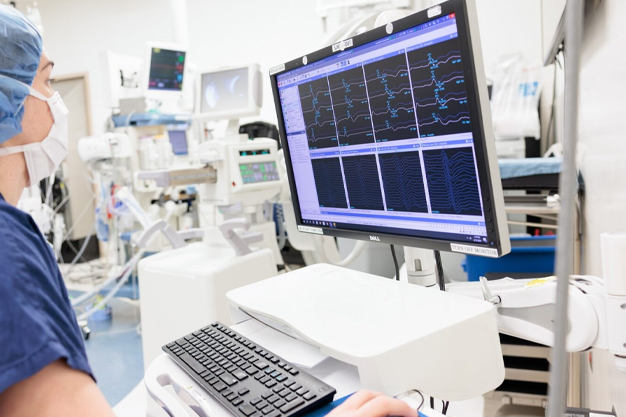
Modern neurosurgery and spine surgery demand absolute precision. Every millimeter matters — and any unintended injury to the nervous system can lead to life-changing consequences for the patient. This is why Intraoperative Neurophysiological Monitoring (IOM or IONM) has become an essential standard of care in operating rooms around the world.
At Praxismed Technologies Inc., we are committed to equipping Philippine hospitals with world-class neurodiagnostic solutions, including advanced IOM systems from our global partners. Here’s how IOM works, why it matters, and how it elevates surgical safety for Filipino patients.
What Is Intraoperative Monitoring (IOM)?
Intraoperative Neurophysiological Monitoring refers to real-time monitoring of a patient’s nervous system during surgery. It uses electrophysiological signals — such as EEG, EMG, nerve conduction, motor evoked potentials (MEPs), and sensory evoked potentials (SSEPs) — to detect early signs of neural compromise.
Simply put:
IOM acts as the “early warning system” of the surgeon and anesthesiologist during high-risk brain and spine procedures.
Trained neurophysiologists, neurologists, and IOM technologists watch the patient’s neural activity continuously. If an abnormal change appears, the surgical team can intervene immediately — often preventing irreversible damage.
Why IOM Matters in Brain and Spine Surgery
1. Prevents Neurological Injury
Surgeries involving the spinal cord, brainstem, or major nerves carry a risk of:
- Paralysis
- Loss of motor function
- Sensory deficits
- Hearing or vision impairment
- Speech difficulty
IOM helps detect problems before they become permanent.
2. Guides the Surgeon in Real Time
During delicate procedures such as:
- Tumor resection
- Scoliosis correction
- Aneurysm clipping
- Spinal decompression
- Nerve root exploration
IOM provides continuous feedback, helping surgeons adjust their approach instantly.
3. Improves Surgical Outcomes
Multiple studies show that using IOM leads to:
- Lower complication rates
- Better postoperative function
- Faster patient recovery
- Fewer repeat surgeries
4. Enhances Communication and Teamwork in the OR
IOM creates a dynamic “triad” of collaboration:
Surgeon
Anesthesiologist
IOM technologist / neurophysiologist
This multidisciplinary approach strengthens decision-making during critical moments.
Common IOM Modalities Used in ORs
Somatosensory Evoked Potentials (SSEPs) Tracks the sensory pathways from peripheral nerves to the brain.
Motor Evoked Potentials (MEPs) Monitors motor pathways to detect risk of paralysis.
Electromyography (EMG) Detects irritation or injury to cranial or spinal nerves.
Free-Running EMG / Triggered EMG Used when working near nerve roots, such as in pedicle screw placement.
EEG Monitoring – Assesses brain activity during aneurysm surgery, carotid procedures, or when managing anesthesia depth.
The Role of High-Quality IOM Equipment
Effective IOM requires:
• Sensitive amplifiers
• High-resolution displays
• Fast signal processing
• Noise reduction
• Specialized software
PraxisMed distributes Neurosoft IOM systems, engineered for:
• Multi-modality monitoring
• Clean signal acquisition
• Fast, real-time alarms
• Ease of use in fast-paced OR environments
We ensure fully trained CAPS and service engineers are available to support hospitals before, during, and after installation.
PraxisMed’s Commitment to Safer Neurosurgery in the Philippines
At PraxisMed, our mission is to elevate neurosurgical care across the country — from Metro Manila to key regional centers. Our IOM solutions are complemented by:
• Clinical Applications Specialists for on-site user training
• Technical Service Engineers for preventive maintenance and emergency support
• Workshops, seminars, and doctor training programs to raise overall competency
This holistic approach ensures that Filipino hospitals not only have the equipment, but also the expertise needed to deliver safer surgeries.
Conclusion:
Intraoperative Monitoring (IOM) is more than a technology — it’s a lifesaving layer of protection for patients undergoing the most delicate brain and spine procedures. With real-time neural monitoring, surgeons gain the confidence to perform complex operations while minimizing the risk of neurological harm.
PraxisMed is proud to be at the forefront of bringing world-class neurodiagnostic solutions to the Philippines, ensuring that every Filipino patient receives the highest standard of surgical care.


Leave A Comment