Pulmonology/Sleep Lab

  • Pulmonology/Sleep Lab

    Features:

    • Abdominal effort
    • Thoracic effort
    • Nasal Pressure Flow
    • Snore
    • SpO2
    • Heart rate
    • 1 x ExG
    • Position
    • Activity
    • 1 x DC channel
    • Microphone (optional)
  • Pulmonology/Sleep Lab

    Home Sleep Apnea Testing Device

    • Type III and IV sleep monitor
    • Sleep apnea diagnostics
    • Examinations both in the hospital and at the patient’s home
    • Easy sensor application without any assistance
    • Automatic and manual data analysis
    • Automatically generated report
    Home Sleep Apnea Testing Device is a small, easy-to-use device designed to diagnose sleep-disordered breathing. It allows identifying sleep apnea and differentiating its type — obstructive/central/mixed. HSAT also enables the determination of the dependence of the breathing disorder severity on the patient’s body position and the evaluation of CPAP therapy effectiveness.

  • ENT

    APPLICATIONS

    • Routine EEG
    • Video EEG Monitoring
    • Long Term Monitoring
    • ICU/NICU Monitoring
    • Polysomnography

    OPTIONAL

    • Upgradable to Neurofeedback Trainings
    • Upgradable to Cerebral Function Monitoring
  • ENT

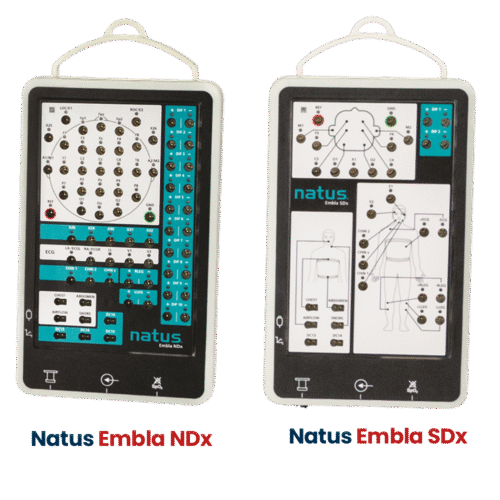
    Natus Embla NDx

    • 64 AC channels (40 referential and 24 referential/differential configurable)
    • 16 DC channels (12 on Natus Base Unit and 4 on NDx breakout box)
    • Up to 4 kHz sampling rate
    • Integrated pulse oximeter and pressure sensor
    • Touchscreen display on base unit with real time interaction with ongoing studies
    • Instantaneous electrode impedance check using onboard touchscreen
    • Perform bio-calibrations from the patient bedside
    • Lightweight breakout box aids in patient’s mobility
    • Integrated 8-bit trigger for synchronizing external events

    Natus Embla SDx

    • 38 channels (20 AC, ref & bipolar)
    • 8 DC channels (6 on Natus Base Unit and 2 on SDx breakout box)
    • 6 dedicated sensor inputs
    • Integrated pulse oximeter and pressure sensor
    • Touchscreen display on base unit with real time interaction with ongoing studies
    • Instantaneous electrode impedance check using onboard touchscreen
    • Perform bio-calibrations from the patient bedside
    • Lightweight breakout box aids in patient’s mobility
Go to Top